Sailing in the Aeolian Islands
August 15, 2025
Distance
150 miles
Elevation Gain
0 feet
Max Elevation
0 feet
Discover the magic of sailing through the Aeolian Islands in Italy — seven volcanic gems off the coast of Sicily where you’ll encounter ancient craters, crystal-clear waters, delicious food, and charming villages. This guide will take you island-by-island through a week-long sailing adventure, complete with insider tips on mooring, the best local cuisine, hidden snorkeling spots, and how to navigate the unique rhythms of Mediterranean island life.


The Aeolian Islands are a collection of seven volcanic islands that lie within about 30 miles of each other, just north of Sicily. I can attest that they are a world-class sailing destination. Expect volcanos, mountains of pistachios, incredible seafood, and classic chaotic Italian vibes.
I was lucky enough to spend a week exploring these islands on a sailing charter with a group of friends in August of 2025. This trip report should be helpful for anyone planning a trip there, but especially helpful to those planning a sailing charter. My goal is to help you avoid some of the research and headaches that we encountered.


You can explore the Aeolian Islands by boat in a week or two. I highly recommend seeing the islands this way, and I’m lucky to have a group of friends that knows how to sail which made this possible. If you don’t have sailing experience, you could hire a skipper to sail for you. If you’re going to self-skipper make sure you feel comfortable dealing with rocky shores and the peculiarities of mooring in the Mediterranean. It’s quite different from the Caribbean.
Lay of the Land


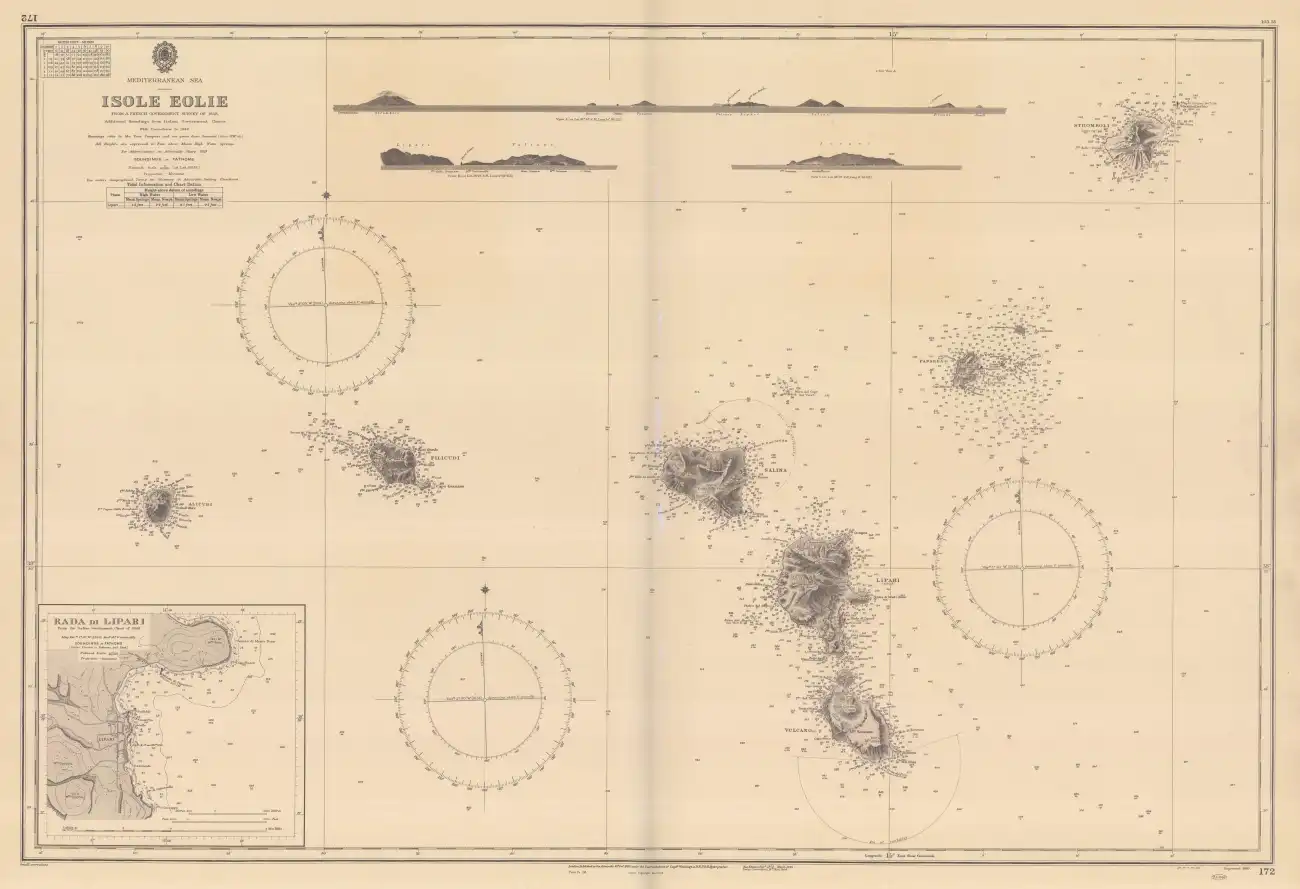
The Islands
The islands are clustered together and made from volcanic eruptions that are not only recent but still active. Many of the islands are perfect cones of mountains and some even have puffs of smoke coming off of the top.


Each island has at least one port or harbor where you can spend the night, enjoy some local food and wine, and replenish supplies. The towns are not all made equal though and you should double-check that where you’re spending the night has the services you need.
Overall, the vibe of the islands is lively but very focused on vacation. We saw very few international tourists and particularly few Americans or Brits which was honestly refreshing. It seemed to us like these islands are a popular vacation destination for Italian families. Some of the islands (like Vulcano and Lipari) have a much more tourist/party vibe, while others have a more refined holiday feel, and the remaining few feel more like true working towns.
It’s possible to move between the islands using ferry service and to stay at hotels in each town. In this manner, Vulcano and Lipari are the kind of center of gravity with the most tourist infrastructure. Day-tour boats run from the mainland and these islands to the other five islands, making the population of each town fluctuate widely during the day. It was common for us to arrive in a port to see a beach full of people only for them all to decamp on a day-boat after sun-down.
Daily Life
You can get around using English without much issue (but at times we had to rely on good Spanish and broken Italian to smooth things over). There’s good 5G signal in every town and even in-between some of the islands making translation and online referencing possible.
Most businesses run through WhatsApp for questions, reservations and the like. A few take emails and even fewer have online booking systems. It’s very helpful to simultaneously be prepared and organized, while remaining flexible and going with the flow. The locals seem to take some things quite seriously (e.g. where to park your dinghy), and other things not seriously at all (e.g. where to park your car).


Cuisine


Seafood reigns supreme in the Aeolian Islands, followed closely by pasta, and then by baking. Swordfish is a very common fish to be found, as well as tuna. Any fish variety beyond these two should be double checked to make sure it is local. A simple swordfish or tuna steak is a common dinner dish and you should certainly try it. Other favorite dishes were various seafood pastas, and the almond spaghetti.
For a sweet treat, cannolis are very popular and common sold at any bakery. They are universally delicious. Granita is the most famous treat available, and it’s effectively flavored shaved ice. In the heat, it is very refreshing but I can’t say that it was our favorite item that we tried. Gelato is much less common, but when we found it, it was fantastic.
Pistachio is an extremely common flavor across any dish sweet or savory, and I highly recommend trying it as much as you can. Pistachio encrusted tuna, pistachio pizza, pistachio gelato, pistachio cannolis — I could go on and on. Try it all, it was featured consistently our favorite dishes.


The most popular and high-quality produce and crops grown on the islands are pistachios, almonds, capers, olives, and herbs. High quality meat is also available from local butchers. The islands get more rain than it might seem and fresh food and produce is fairly available. I’d recommend purchasing as many food items as you can to bring home and cook with. You’ll see them sold commonly in shops.
Eating Out
Much of your time on these islands will revolve around food, so it’s helpful to get a sense for the patterns that guide eating.
Breakfast
Breakfast is simple and typically involves little more than an espresso, and a pastry. If you want, you can go for a latte or cappuccino but in my opinion, the quality of Italian coffee ends at the espresso (I know I’m going to get angry comments about that). Every town will have a number of bakeries serving morning breads and pastries but you’ll need to do some pointing and asking to figure out what everything is.


In our 10+ days in Italy we never figured out a consistent system for ordering at cafes. It seems that every one was different and everyone was annoyed that you didn’t know how their cafe worked. You can always sit down at a table outside and a server might come to you if you are polite and aggressive enough. Faster is to go in to the bakery to order and pay directly with the staff. You either order and pay up front at the cashier and they give you a receipt which you take and shove into the hands of any staff member that will make eye contact with you, or you shout an order at any staff member that will make eye contact with you, and they will give you a receipt, and then you go and pay. Good luck.
Lunch & Apertivo


Lunch is a more orderly affair and its not uncommon for it to be a larger meal. Most restaurants that serve lunch close around 2:30 PM and then reopen later for dinner, so keep that in mind if you’re trying to have a late lunch. There are numerous smaller take away or fast food stalls that serve savory pastries, pizzas, or even fresh seafood dishes in a very casual setting if you don’t want a full restaurant experience.
Before dinner you have apertivo (i.e. a chance to get drunk while your stomach is still empty). This starts around 6:00 PM. Before that, few things are open or lively. Apertivo is a great chance to get a sunset view, check out other areas of town, and get a snack in while you wait for dinner.
Dinner
Dinner in Italy starts at 8:00 PM at the earliest. Numerous times when inquiring about a reservation we were told we could be served “very early, at 8:30 PM”.
If you are someone who likes an early dinner, plan ahead because there is little flexibility to this schedule — certainly at any restaurant serving good local cuisine. We were a group of 8 and found it very necessary to make reservations for dinner, or at the very least to stop by during lunch service or before apertivo to put our name down. Even though restaurants often run a clear wait list and reservation book, time is a loose concept in the islands.
We once turned up to dinner reservation 1 hour late and we were seated. We were however regularly turned away from restaurants where we didn’t have a reservation. When you are ordering, be careful to double check the price of items. Restaurants will often have a “fish of the day” which they will prepare for you, and you should totally try this. However, we were swindled once by not asking for the price and being charged 140€ for the privilege.


Weather
Europe has been hot in the summers recently. So I was expecting to be roasted alive. However, I found that the temperature rarely broke 90ºF and if it did, close proximity to the water made it a minor concern. Once you step away from the water, it's a different story. On shore, a lack of breeze and direct sun exposure can make the heat feel stifling. If you’re exploring a town, do so in the morning or early evening. In mid-day it is very hot, and the towns are very quiet for that reason. Everyone hides inside.
We had a week of perfect sun and very little wind, but it is very possible for the islands to get storm systems that come through. Be prepared for those and don’t assume that you won’t get rained on at all.
Boat Chartering
Chartering a sailboat is the best way to explore the islands hands-down. It’s extremely common, but does require either the skill to captain a boat, or enough interest to justify hiring a skipper. On a boat you have so much more freedom in your itinerary, you can experience many things on your own that would otherwise require a touristic booking. I also think sailing gives you a more authentic taste for what life is like in the islands.


We chartered a 41’ Bali built in 2020 as a bare boat charter, meaning we had to do our own skippering and provisioning. This was just large enough for 8 of us, given that a few of us were happy to sleep in hammocks. The rest slept in the 4 cabins below which are more comfortable, but get stuffier in the heat. In my opinion, falling asleep looking at the stars is way better.


Schedule
A typical boat charter will run 7 full days or “Saturday to Saturday”. But, how many of those days you actually get depends. We arrived to the marina to check in on the later side of our first day (Saturday), meaning that we didn’t have enough time to get off the dock and to our next destination until Sunday. We also determined that to have the boat back by 8am the following Saturday we would realistically need to be in port the Friday evening before. So this became a Sunday to Friday itinerary.
Pro tip: Get to the marina early with your shopping and preparation done so that you can get off the dock and to your first destination Saturday night. This gives you an extra day in your itinerary.
We left from Capo d’Orlando Marina on the Sicily mainland. This marina is a very common one to leave from and many charter companies operate there. We drove 3-hours there in a rental car from Catania, where the major airport in Sicily is. The rental car was very helpful to manage bags and do grocery shopping with. I’d recommend doing that instead of a taxi or shuttle.
Charter Company
We chartered our boat from the company Barcando. I would give Barcando 3 out 5 stars.
- They had a boat.
- It was a good price.
- It floated.
That’s about all I can say. The check-in process was a bit chaotic. There was little assistance or guidance getting familiar with the boat. The boat lacked speakers, and had clearly had some major wear and tear. We were informed of their expectation that we be back in port one day early only upon getting on the boat. During our sailing, the jib tore free of the jib-sheet and the line supporting the boom was worn so thin we were worried it would break and the boom would fall on us. Overall, not great. But I’m not sure if you’d get a better experience with a different agency.
Provisioning
How much you need to provision your boat depends on how much you plan on cooking. We expected to make breakfast and lunch on board each day, as well as have a well-stocked liquor cabinet. Dinner we would do on shore each night except one.


We did our largest grocery haul on shore the day we checked in as the places to restock on the islands are few and far between and much more expensive. We also made sure to get ample bottled water (at least 1 liter per person per day) to start, knowing that we would need to get more later.
In our week of sailing mostly under power we did not need to refuel, but we did run the water tank down to empty. Finding fresh water to refill is basically impossible. Lipari and perhaps Santa Marina would have been options to refill but getting in to either port would have been a stressful hassle given how packed the ports become.
Mooring and Anchoring
Sailing in Europe is well developed but lacks many of the luxuries you might expect in the Caribbean. In the Aeolian Islands most towns have an operation or two that manages moorings that they charge a nightly fee for. These book up quickly and require a reservation at least a few days ahead. You can get in touch with most marinas over WhatsApp and their contact details are found on Google or in the guide book that the charter company provides (if they don't provide one, ask for one). In August, moorings went for ~€150 a night.


You can arrange for a dockside stay at marinas in the same manner but these need to be booked further out and cost dramatically more. If you do stay dockside, going stern-to the dock in Mediterranean mooring style is common, however the marinas offer bow-ropes so that you don’t need to set your anchor. We were quoted €450 for docking in Salina which we happily declined.
You can use the Navily app to make mooring reservations for most of the marinas in the Aeolian Islands. You can request to stay through the app and the operator will accept or decline your request. You provide your credit card in the app, however we found that the actual payment was taken directly from the marina each time and never through the app. In addition, this app is a great resource to check for hazards, get detailed information on anchorages, and more.
Anchoring is a final option and generally simple given a shallow, flat, sandy bottom in most ports. There is no need to Mediterranean moor in these harbors and you can instead swing freely on the hook. However, read the details for each port carefully (Navily has the details) and be aware of the weather. Strong winds can be common in the Aeolian islands and there are few well protected ports from swells. In these cases, a mooring ball is a must.
Navigation
Navigation in the Aeolian Islands is fairly straightforward. You should receive a guidebook from the charter company that includes a chart of the islands and a detailed description of the ports and harbors. Your boat will also have a GPS with detailed charts that you can use to navigate and set a course. In general there aren't too many shallow areas as is typical in the Mediterranean. The terrain tends to plunge down underwater to a deep level very quickly making close-to-shore navigation very doable. That being said there are certainly shallow areas that you need to be aware of.


Cost
We did this trip as a group of eight and I’d say it cost us each about $2.5k for flights, food, activities, and the boat charter. That sounds a bit pricey but when you consider that for this cost we had our own boat we could move however we wanted between any island, I’d say it’s money well spent. It was about $1k per person for the boat charter, ~$800 each for food and drink, and about $700 for remaining logistics (mooring fees, flights, etc).
Itinerary
Let's get in to a day-by-day run down of our itinerary. It looked like this.
- Day 1 (Aug 16) – Arrive Capo d’Orlando Marina, provision catamaran, crew briefing, dinner near marina.
- Day 2 (Aug 17) – Sail to Vulcano; swim at Grotta del Cavallo, take a mooring in Porto di Vulcano, evening ashore.
- Day 3 (Aug 18) – Sunrise hike to Gran Cratere on Vulcano, then sail to Filicudi; visit La Canna (anchor for lunch and snorkeling); anchor in Pecorini harbor; dinner ashore in town.
- Day 4 (Aug 19) – Sail to Salina; Stop in Malfa for wine tasting; take a mooring off of Santa Marina; wine tasting in Lingua, then dinner in Santa Marina.
- Day 5 (Aug 20) – Re-provision in Santa Marina, then sail to Stromboli; moor at Marina del Gabbiano; night lava show from Sciara del Fuoco. Dinner on the boat.
- Day 6 (Aug 21) – Sail to Panarea; Stop in Basiluzzo for snorkeling, then moor in Panarea, explore village, sunset at Raya, dinner ashore.
- Day 7 (Aug 22) – Sail to back to Capo d’Orlando; stop on south-end of Vulcano for lunch, then final leg to marina.
- Day 8 (Aug 23) – Disembark, and travel home.
In this write up I will call out the reservations we made ahead for moorings and meals.
Day 1: Arrival and Provisioning
We drove from Catania to Capo D’Orlando over the mountains and alongside Mount Etna. It was a beautiful drive but during lunch a massive storm system came through that dumped inches of rain and hail. We made a dash to the car after the restaurant lost power and began to make our way before realizing that the streets were flooded and police weren’t letting cars through. We ended up doubling back down to the coast and taking the coastal route the rest of way. It was a warning of how quickly the weather in this area can turn.


Upon arriving we completed check-in, took care of provisioning, and grabbed dinner at the marina. In the morning we had some final provisioning to complete before heading out of port.
Day 2: Capo D’Orlando to Vulcano
This was our first day on the boat and our destination was the island of Vulcano known for its volcanic activity and lively vibe.
We were off the dock by 9:30 AM headed north. There was no wind and it would continue to be still for most of the trip so we motored and made the crossing to Vulcano in a few hours. Our first stop was the rocky cove near Grotta del Cavallo which is a deep cave you can explore by dinghy or kayak.
We made anchor in the cove surrounded by steep, rocky cliffs and prepared a delicious risotto for lunch paired generously with wine. We took the kayak and dinghy over to the cave to explore and did some snorkeling and paddle boarding around the boat. This is a common way to spend a day in the Aeolian Islands. Find a cove, anchor, swim, drink, eat, and party.


In the mid-afternoon we hauled anchor to head out around the north tip of the island to our evening mooring. Upon arriving in the port we were greeted by Nautica Est and they showed us to our mooring ball. We then got ready to go ashore for the evening with some quick showers and drinks.


We walked first to Sabbie Nere for a beach-side drink at Baia Negra while we watched sunset over the port. This is a fun beach bar that is very basic but has a great view. Get some beers and enjoy the sunset.


Then we walked to town to find dinner. We realized that we should have made plans ahead for a group our size as many of the recommended restaurants we tried could not seat us until well after 10:00 pm. We ended up finding a cute spot, however this was the restaurant that charged us €140 for a 2kg fish.
After dinner we got gelato at Il Gelato Di Antonio which was absolutely fantastic. I highly recommend the pistachio gelato!
Overall, Vulcano is a classic European vacation town — which means DJs until 4am, kids hungover smoking cigarettes at the cafes in the morning having not gone home yet, and a general sense that very few people are actually “from” there.
It’s clearly a spot where families come to vacation but it lacks a town that stands on its own. Check it out if you have the time, but I would prioritize other islands first. For us it was a nice warm up and it's certainly the easiest place to get to from the mainland.
Logistics
Mooring Booking: Google Maps — Nautica Est (WhatsApp +39 347 448 2677) in Porto di Vulcano for €150. We booked through Navily the day of.
Recommendations
- Google Maps — Baia Negra
- Google Maps — 9852 Vulcano Home Restaurant
- Google Maps — The King of Fish
- Google Maps — Il Gelato Di Antonio
Day 3: Vulcano to Filicudi
The next morning we were up very early to trail run the Gran Cratere. This trail takes you straight up to the rim above the volcanic crater that forms the highest point of Vulcano Island.


It gains about 1200 feet of elevation and is only open before 10am and after 4pm. Go as early as you can. Our run to the top took about 45 minutes but it would take substantially longer as a hike. From the top you can see the entire archipelago glowing in the morning sunlight, as well as great views down into the volcanic crater.


After grabbing some espresso and pastries in town, we made our way back to the boat and set off for Filicudi. Filicudi, and the nearby smaller island of Alicudi, are the smallest and most remote islands of the archipelago. They contain the least tourist infrastructure and few roads. Alicudi actually has no cars. However this remoteness makes for a nice charm.
We went straight for La Canna, a sea stack that rises prominently from the water to the west of Filicudi and provides some nearby shallow rocks for great snorkeling. We anchored easily on a sandy bottom and floated for lunch.
After some snorkeling and exploring the sea stack, we made for Pecorini, the main town of Filicudi. We had arranged for a mooring there ahead of time with I Delfini.


Knowing the island was small we made sure to arrange dinner ahead of time, settling on the highly recommended La Sirena Hotel. The only reservation available was 10 PM which we accepted.
To pass the time we went ashore for an apertivo at the nearby bar. The town was busy with day-boat tourists but they began to clear out around 9pm making room for us to sit and chat in the dimming light on a quaint seaside walkway until we were seated for dinner. La Sirena served us a fantastic meal topped off most memorably with a pistachio ice cream which we continuously ordered more of it was so good.


Logistics
Mooring Booking: I Delfini marina (WhatsApp +39 340 148 4645) for €140. We arranged over WhatsApp the day of.
Restaurant Booking: Google Maps — La Sirena Hotel (Phone +39 328 686 9921). We made our reservation over the phone the day of.
Day 4: Filicudi to Salina
We set off promptly the next morning as the sun was still rising to make our way to Malfa on the north side of Salina.


Salina is known as the Green Island and you can notice that the dramatic double volcanos that make it up are more lush than some of the other islands. This is the island best known for producing wine, capers, pistachios, and other produce.


In Malfa we wanted to stop to explore the town and do some wine tastings. The harbor of Malfa is fairly under-developed and offers few places to anchor. We ended up anchoring to the east of the water tanker dock. We had little wind but due to the exposed and industrial nature of the port, our friend/captain Luis opted to stay aboard just to make sure nothing went awry. The rest of us went ashore.
The walk up to the town of Malfa was hot but offered sweeping views of the bay and port. The town itself is consists of small whitewashed houses and shops perched on the hillside, with tiny alleyways and staircases winding between them.
We had arranged for a wine tasting at Fenech which is a small vineyard and winery in Malfa. Upon arriving, Francesco the owner greeted us and sat us down for a multi-hour affair. While pouring us large "tasting" glasses of red and white wine from his vineyard, he gave us a thorough family history of how he came to be in the wine business. Interspersed throughout, Francesco served a variety of local Aeolian dishes, including some of the absolute best capers I have ever had. After the food and wine, Francesco poured us his own vermouth and a variety of liqueurs. We ended up wandering out of there with boxes and boxes of wine, liquor, and food.


From Malfa we motored to the east side of Salina to Santa Marina where we had arranged a mooring for the night.
We inquired about a dock-side reservation and were told there was no space, and that the price would have been ~€450(!!). Instead we took a mooring ball just outside the port and enjoyed the evening light over the sea-side vineyards and the picturesque town of Santa Marina.


For an evening wine tasting we took the dinghy south to Lingua where we went ashore to Hauner Winery. We had arranged for a tour of their winery, and a tasting. From the Hauner patio we were treated to a view of the sun setting over nearby Lipari island.


The staff offered a very informative tour of their history and the unique properties of wine from the Aeolian Islands. The wine tasting came with a nice selection of local food which was tastefully paired with the wines they poured.
In a typical Italian fashion there was no rush, and our tasting took well over 3 hours, blasting past our 9PM dinner reservation a bit north in Santa Marina. However, after moving things along and a frantic dinghy ride, we arrived 1 hour late at 10pm to Casa Lo Schiavo who still sat us for a delicious meal.
Logistics
Wine Booking: Google Maps — Fenech Winery We made a reservation for a 1pm tasting using the contact form on their website.
Wine Booking: Google Maps — Hauner Winery (WhatsApp +39 392 776 8149). We made a reservation over WhatsApp.
Restaurant Booking: Google Maps — Casa Lo Schiavo (WhatsApp +39 339 103 0946) We booked over WhatsApp several days in advance.
Recommendations
- Google Maps — Nni Lausta
- Google Maps — Porto Bello
- Google Maps — Da Alfredo
- Google Maps — Capofaro Resort
- Google Maps — Azienda Agricola Biologica
- Google Maps — Hotel Signum
Day 5: Salina to Stromboli
We were up early again for a run along the road between Santa Marina and Lingua. We got great views of the bay as we ran up on the ridge line. Back in Santa Marina we found a cafe for breakfast before taking care of some grocery and souvenir shopping. Salina is the best island to re-provision as great produce is grown right there and available in town. We planned to cook dinner aboard that night so we picked up some fresh meat and other provisions.
With fresh provisions aboard, we set off for the island of Stromboli, which is the island furthest east in the archipelago. On our way we set anchor in a bay on the west side of the island for a lunch of charcuterie boards of local cheeses and meats. We had a good swimming session, some fairly underwhelming fishing, and plenty of wine before setting off for the town of Stromboli on the east side of the island.


The main attraction on the island of Stromboli is the active volcano which makes up most of the island. Occasionally, it erupts enough to send a stream of lava down the face of the mountain into the sea, making for a glowing red gash that can be seen at night. While this phenomenon happens only every few years, the volcano itself erupts continuously making for an incredible lightshow you can see at night from the water off of the north coast. For safety, the coast guard demands that you stay at least 1 mile offshore, so our plan was to sail out offshore at sunset and watch the light show.
Upon arriving in the mooring field for Stromboli we were shown our mooring ball by the marina workers, which we tied our paddle board to as a mark. We then set off motoring for the lava show.


As we arrived on the north shore we were treated to an absolutely stunning sunset. We prepared our dinner of pork roast, bean stew, salad, and freshly baked focaccia from a sourdough starter we had managed to get going, and set up to eat dinner on the bow of the boat.


Once the sun was down, it was time for the show. In the remaining twilight, we could only see puffs of smoke rising from the crater of the volcano. But then, suddenly, darkness truly set in.
We were stunned to see jets of glowing lava shooting out of the crater. Every 10 minutes or so, we would see a fresh eruption. We couldn't believe our eyes. It was one of the most magnificent natural events I've ever seen. We were blessed with no wind and clear skies, allowing us to drift still, facing the volcano with no engine running or anchor set as we ate our dinner, drank wine, and watched the show.


Eventually, we had our fill of eruptions, and we motored back to the marina. Relying on a GPS pin we had set and our dinghy we were able to find our mooring ball, and settle in for the night.
Logistics
Mooring Booking: Google Maps — Marina del Gabbiano (WhatsApp +39 377 389 9607) – We arranged this mooring via WhatsApp several days ahead and paid €160.
Day 6: Stromboli to Panarea
The next morning we had a short sail and leisurely schedule, allowing us to take the morning to head to shore and explore the town of Stromboli. It’s a beautiful town nestled into the hill side where the tight streets are filled with residents and tourists alike parting ways for motor carts barely narrow enough to fit down the alley ways. After a coffee and some snacks, we returned to the boat to head off for some snorkeling near the island of Panarea.


En-route to Panarea, we took anchor near the Baia di Basiluzzo, a rock mount that offers some shelter from waves and good snorkeling conditions. We enjoyed a lunch of caprese salad and wine, and took in some fishing and snorkeling.


Then, with the wind having filled in for the first time all week, we went under sail to Panarea, our final island of the trip.
We arranged for a mooring in Panarea which we took hold of in time to head to shore to explore ahead of dinner. Panarea doesn’t offer a place to tie a dinghy but the marina offers a very good taxi service. Upon taking your mooring they give you three tokens for free trips to and from your boat 24 hours a day.
Panarea is known as the “rich island” and you can see the difference the minute you step ashore. Whereas other islands have a distinctively casual atmosphere, on Panarea you can’t go 10 steps without seeing an ascot, a gown, or stylish shoes. It’s a refreshing change, but not one that you’d want to catch you off guard.
After exploring the town, we went for our dinner reservation at Ristorante Di Pina. This beautiful space offers a delicious meal from an extensive menu and I would highly recommend it.
Following dinner we headed back to the shore where made our way to Bridge Sushi Bar which turns into a rooftop club at night. We had a great time drinking and enjoying the DJ before departing for Hotel Raya where we finished out the night. All told we got our taxi back to our boat around 3am.
Logistics
Restaurant Booking: Google Maps — Ristorante Di Pina. We booked through their website at the beginning of the week.
Recommendations
- Google Maps — Bridge Sushi Bar
- Google Maps — Hotel Raya
Day 7: Panarea to Capo D’Orlando
We awoke just a few hours later to a stunning sunrise over Panarea, the sound of a local fishing boat offering fresh fish for purchase, and a surprising stiff breeze and strong swell. It was going to be a great final day for sailing.


We had a long distance to make today: all the way south past Vulcano and then back to Capo D’Orlando on the main land. To help cure hangovers we prepared some sourdough pancakes from the remaining sourdough starter and some scrambled eggs for breakfast. We then set off under sail to Vulcano.
We had a pleasant but rough sail straight to Vulcano on a beam reach and were making great progress until our jib separated from the jib-sheet leaving the sailing flailing in stiff wind. We were able to wind the loose sail up on the forestay and secure it with some line enough to get us to calmer air and water in the shadow of Vulcano. Here we took a rest and prepared a final lunch of risotto with mushrooms and pancetta.


We then set off on our final leg to Capo D’Orlando at which point the jib promptly blew free again. This time we had to spend quite some time wrestling it into place and securing the sail and the rolling mechanism to ensure it stayed put.
Needless to say this was a huge safety concern and mood dampener thanks to poor maintenance from Barcando, our charter company. Back in port we made our concerns known to the staff and while they promptly replaced the sail and addressed other issues we pointed out, this was obviously too late.
In Reflection
We made it back to port safely having had a week of incredible sailing in a beautiful, magical area of the world. I would recommend the Aeolian Islands to anyone traveling to southern Italy. They strike the perfect balance of beauty, remoteness, and comfort. The views were stunning. The food was delicious. The people were warm and welcoming.


You could easily spend more than a week getting to know these islands deeper than we did. Notably I would have liked to have visited Alicudi, spent several nights on Salina, and perhaps more than one night on Panarea. Having a night ashore to shower and reset would have been nice.
There are also several restaurants that I would have liked to try but did not have reservations available. That being said, we ate so well throughout the trip I don’t think you can go too wrong.
Advice
If I were to do this trip again, I would take the following points of advice:
- Plan to arrive early enough to leave port the first day.
- Keep your itinerary flexible to allow for weather or other circumstances to change your schedule
- Make time to explore towns before 10 AM or after 4 PM. Between those hours most things are closed for the heat.
- Plan to eat no earlier than 8:30 PM.
- Reserve your dinner spots and mooring spots before your trip starts. You can always adjust them later.
Thanks for reading this trip report. I hope it’s inspiring, helpful, or both. This trip was successful in large part because of the planning and organization of our group. I have a feeling these islands are only going to get more popular over the coming years, and so I would highly recommend getting a trip in there as soon as you can!